
An Overview of the K-Style Gutter
K-STYLE GUTTERS, GUTTERS, GUTTER INSTALLER, EXPERT GUTTER INSTALLER, NEW GUTTERS, AFFORDABLE GUTTERS
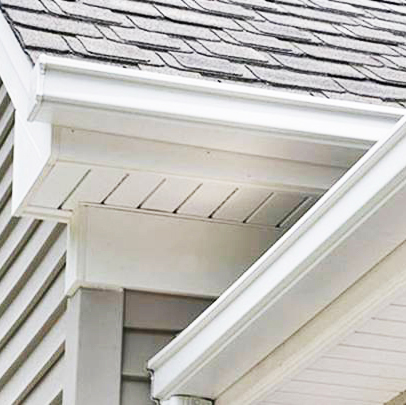
In the realm of residential water management, the K-style gutter stands as the most prevalent design across North America. Named for its unique outer silhouette that mimics the letter “K,” this profile transitioned from a niche architectural choice to the industry standard during the mid-20th century.
For homeowners researching new gutters, understanding why K-style gutters are the default gutter option for many is helpful. The engineering behind this shape and its performance is rooted in specific geometric advantages.
K-Style Gutter Engineering
A K-style gutter is characterized by a flat back and a decorative front that mimics the design of crown molding. Unlike the traditional semi-circular “half-round” gutters, the flat-back design allows the trough to be mounted flush against the fascia board.
This design serves two primary functions:
- Structural Rigidity: The folds and angles in the “K” profile act as reinforcement ribs. These angles allow the metal (typically aluminum or steel) to resist bowing or buckling under the weight of heavy rainfall or snow.
- Architectural Integration: The front-facing curve, modeled after crown molding, allows the drainage system to visually integrate with the home’s trim, appearing more like an intentional architectural feature than a utility attachment.
Performance Advantages of a K-Style Gutter
K-style gutters outstanding benefits have contributed to their widespread adoption:
- Increased Volumetric Capacity: Due to their rectangular cross-section, a 5-inch K-style gutter can hold and transport a significant volume of water. This makes them highly effective for steep-pitched roofs where water runoff is high.
- Stability and Attachment: For a professional gutter installer, the flat-back profile is easier to secure. It can be fastened directly through the back of the gutter into the rafter tails or fascia, providing a more stable connection than systems requiring external brackets.
- Economic Availability: Because the K-style gutter is the most common profile produced by manufacturers, the raw materials and the machinery required to form them are highly optimized. This accessibility makes them affordable gutters for standard residential applications.
K-Style Gutter Maintenance
Despite their efficiency, K-style gutters are not without maintenance drawbacks. The same design elements that provide strength can also complicate long-term maintenance.
Debris Accumulation
The sharp angles where the bottom of the gutter meets the front and back walls create “dead zones.” Unlike a curved gutter where water naturally sweeps debris toward the center, K-style troughs tend to trap silt, shingle grit, and organic matter in these corners. Over time, this buildup can lead to clogs if gutters are not cleared regularly.
K-Style Corrosion Risks
Because the bottom of the gutter system is flat, water does not always drain perfectly dry. If the system is not pitched with extreme precision by an expert gutter installer, small amounts of standing water can linger in the corners. In steel or lower-grade metal systems, this constant moisture contact can accelerate oxidation and lead to “pinhole” leaks.
Cleaning Challenges for K-Style Gutters
The interior of a K-style gutter contains more obstacles than other profiles. Internal hangers, the hardware used to keep the gutter’s shape, can make it difficult to use scoops or brushes. Also, the interior crevices of the “K” curve are harder to flush clean of fine sediment compared to a smooth, U-shaped interior, such as the classic half-round gutter style.
Selecting the Right Gutter Material
When choosing new gutters, the material used can largely influence the lifespan of the system.
- Aluminum is favored for its balance of weight and rust resistance.
- Galvanized Steel offers superior impact resistance in areas prone to hail or heavy snow but requires more vigilance against rust.
- Copper provides the longest lifespan and a distinct aesthetic but comes at a significantly higher price point.
The K-style gutter remains the dominant choice because it offers the highest water capacity and structural strength for the lowest relative cost. Bear in mind that the effectiveness of the K-style gutter system is entirely dependent on the quality of the installation. An expert gutter installer must ensure the pitch is calculated precisely to overcome the flat-bottom design and minimize the risk of standing water.
By understanding these technical nuances, homeowners can make an informed decision on whether the K-Style gutter profile meets the specific needs of their roofline pitch, home’s aesthetic, and budget.